
What another season of ignoring this actually costs
Every month you put off dealing with the garage door after a room conversion, you're paying for it in small ways that add up: a struggling opener motor burning out early (replacement openers typically run $150–$500 before labor), rust creeping into hardware that now sits in trapped humidity, or a door that's quietly out of compliance with wind-load requirements right as hurricane season winds down and the next one starts building. None of that shows up as one big bill. It shows up as "huh, that's been squeaking for a while" right before it stops working entirely — usually during a storm, when you need it most.
The argument, settled
One spouse says the garage door is "basically a wall now" since nobody parks a car in there anymore. The other spouse says it's still a garage door, full stop, and needs to be treated like one. The second spouse is right, and here's the plain-language reason why: the door and opener were engineered for a specific job — cycling up and down to let a car in, built to a certain weight and wind-pressure rating. Turning the room behind it into a gym, workshop, or office doesn't change what the door physically is. It just changes how it's used, insulated, and sometimes modified, and all three of those create new stress on hardware that was never designed for the new setup.
What actually changes
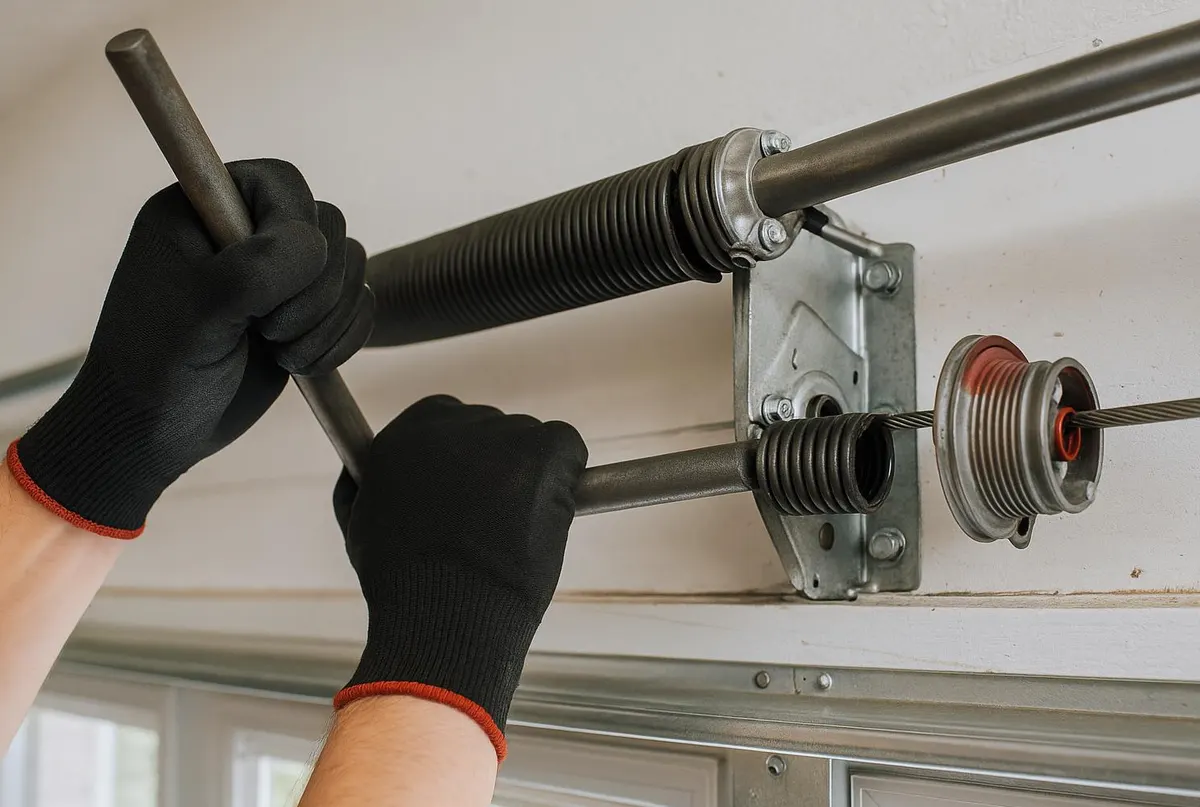
- Added weight. Insulation panels, drywall backing, or a second layer bolted to the inside of the door for soundproofing (common in gym and workshop conversions) adds pounds the springs and opener weren't sized for. Springs wear out faster; openers strain and overheat.
- Trapped humidity. A finished room usually means less airflow through the garage. Combined with Florida's humidity and afternoon downpours, that moisture has nowhere to go. It condenses on steel panels and hardware, speeding up rust — especially if the house is anywhere near salt air.
- Blocked or modified tracks. Gym equipment, workbenches, and shelving often get mounted close to the door's path, or the tracks get adjusted to make more interior room height. Either one throws off alignment and causes the door to run off-track or bind.
- Wind-load integrity. If the door was ever swapped, re-skinned, or had its reinforcement altered as part of the conversion, it may no longer meet the wind-load rating it had originally. That matters a lot here, where garage doors are a known weak point during storm-force winds.
- Opener mismatch. A heavier, modified door paired with an opener rated for the original lightweight door is a slow-motion failure. The motor works harder every cycle until it gives out.
Real symptoms to watch for
- The door feels heavier when operated manually, or the opener strains and makes a louder motor sound than it used to
- Visible rust starting at the bottom panel, hinges, or track bolts
- The door doesn't sit flush at the bottom, or light shows through the gaps
- Panels feel swollen, slightly warped, or stick before closing fully
- The remote works intermittently or the door reverses without an obstruction
The trade-off worth discussing honestly
If the garage is now a finished room and the door is purely decorative or rarely opened, some homeowners choose to have it permanently sealed and insulated as a wall instead of a functioning door — which solves the mismatch problem entirely but means giving up that access point and resale appeal for buyers who want garage space. If the door still gets used — for storage access, as a secondary entry, or because you're not ready to give up garage flexibility — then the fix is matching the hardware to the new reality: a properly rated opener, correct spring tension for the added weight, and a maintenance check before storm season rolls around again.
When to call St. Petersburg Garage Door
If the door has gotten noticeably heavier since a conversion, is showing rust at the hardware, or you're not sure it still meets wind-load requirements after modifications, that's worth a proper inspection rather than guessing. Our technicians handle Garage Door Opener Installation sized correctly for a door's actual current weight, and Preventive Maintenance & Tune-Ups that catch rust, misalignment, and spring wear before they turn into a stuck or failed door mid-storm.
If you've converted your garage and the door's been an afterthought ever since, call St. Petersburg Garage Door for a straight answer on what needs attention before the next storm season tests it for you.